
Every treatment plan at Munroe Wellness is built around you — not a template. We take the time to understand your body and your goals. Click any service to learn more.
01
Chiropractic Adjustments
Precise, gentle corrections to restore proper spinal alignment, relieve nerve pressure, and help your body heal the way it was designed to.
30 – 45 min→
02
Spinal Decompression
Non-surgical traction therapy that gently stretches the spine to relieve disc pressure — ideal for herniated discs, sciatica, and chronic back pain.
30 – 45 min→
03
SoftWave TRT
Cutting-edge shockwave therapy that stimulates your body's natural healing response — reducing inflammation and accelerating tissue repair without drugs or surgery.
15 – 30 min→
04
Cupping Therapy
Targeted myofascial release using suction cups to relieve muscle tension, improve circulation, and accelerate recovery from training and chronic tightness.
20 – 30 min→
05
Graston Technique
Instrument-assisted soft tissue mobilization that breaks down scar tissue and adhesions — restoring range of motion and easing chronic pain at its source.
20 – 30 min→
06
Active & Athletic Care
Located inside Pack Animal Fitness, this practice is built for people who move — supporting recovery, performance, and longevity for athletes and everyday movers alike.
Tailored sessions→
Meet Your Doctor
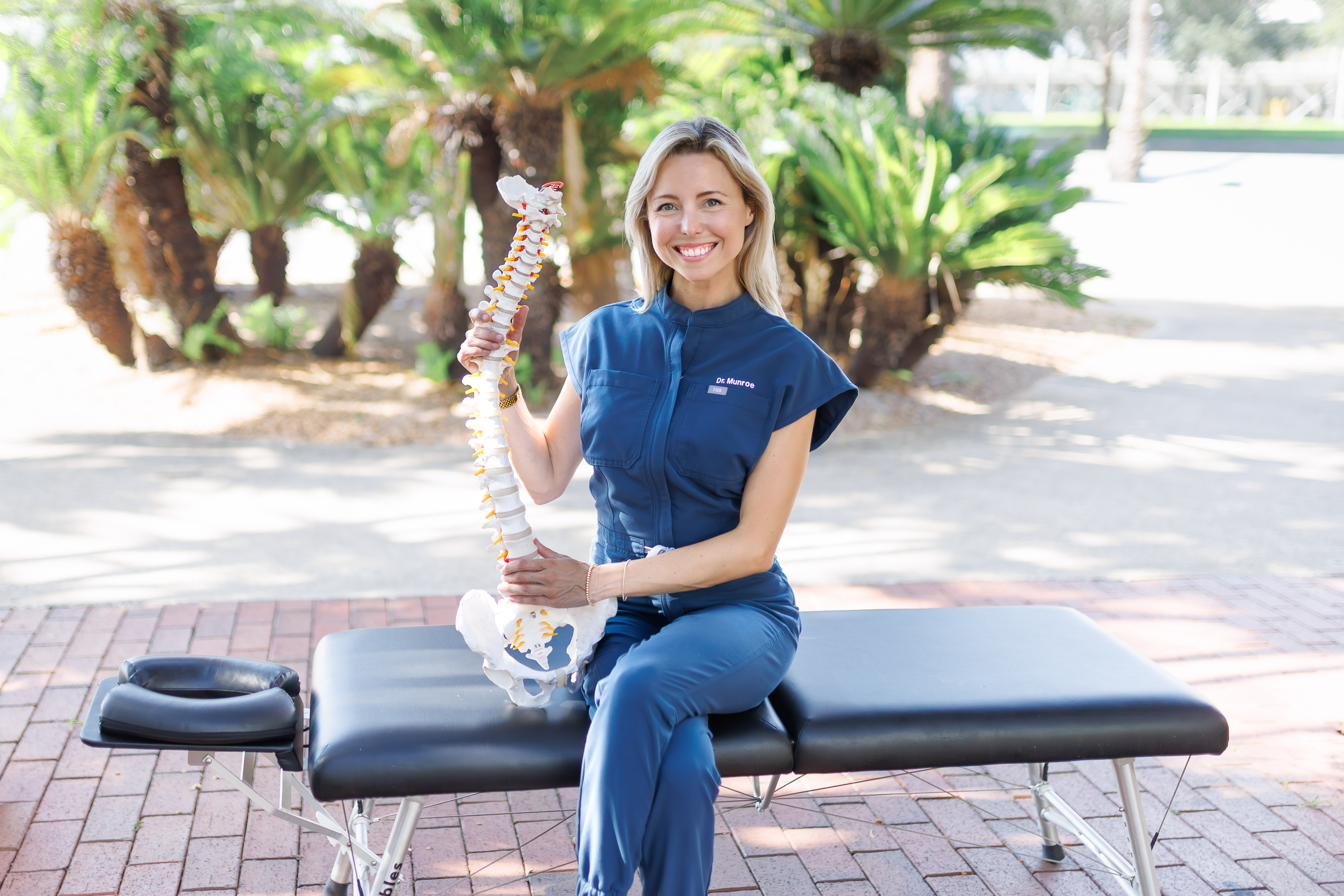
Dr. Ann Munroe, DC
"I believe your body is capable of extraordinary healing — it just needs the right support."
Dr. Munroe built her practice inside Pack Animal Fitness — a locally-owned St. Petersburg gym — because she believes care should meet you where you live and move. As a female chiropractor in a community of athletes, recovering bodies, and everyday movers, she's created a space that feels less like a clinic and more like an extension of your training.
Her approach blends evidence-based technique with genuine attention to each patient's unique presentation. Whether you're recovering from an injury, managing chronic pain, or simply wanting to move and feel better — you're in the right place.
Credentials & Certifications
Doctor of Chiropractic
SoftWave TRT Certified Provider
Graston Technique Certified
Cupping Therapy Certified
Member, Florida Chiropractic Association
Book an Appointment
Ready to feel better?
Pick a time that works for you in our online scheduling portal — you'll get instant confirmation by email.
Precise, gentle spinal corrections that restore proper alignment, relieve nerve pressure, and put your body back in its natural healing state.
Session length: 30 – 45 minutes
What are chiropractic adjustments?
A chiropractic adjustment — also called spinal manipulation — is a controlled force applied to a joint in the spine that has become restricted in its movement. Dr. Munroe uses her hands or a small instrument to apply a precise thrust, restoring proper motion and alignment to the vertebrae.
The goal is to reduce pain, improve function, and support the body's own ability to heal. Adjustments at Munroe Wellness are gentle, targeted, and evidence-based — tailored to each patient's unique presentation.
What does an adjustment treat?
Chiropractic adjustments are one of the most well-researched treatments for musculoskeletal pain. Common conditions that respond well include:
Lower back pain and lumbar dysfunction
Neck pain and cervicogenic headaches
Mid-back pain and thoracic restrictions
Hip and sacroiliac joint pain
Shoulder and extremity dysfunction
Posture-related discomfort from desk work or training
What to expect at your first visit
Dr. Munroe will begin with a thorough intake and orthopedic assessment. She'll ask about your history, evaluate your posture and movement, and identify areas of restriction before performing any adjustment. Most patients experience immediate relief after their first session — though a care plan is often recommended to achieve lasting results.
Why choose Munroe Wellness for chiropractic care in St. Pete?
Located inside Pack Animal Fitness in St. Petersburg, FL, Munroe Wellness offers a uniquely integrated environment. Dr. Munroe works alongside athletes and everyday movers, which means your chiropractic care is informed by how your body actually performs — not just how it feels standing still.
Quick facts
Session: 30–45 minutes
No surgery or medication
Evidence-based technique
Tailored to each patient
Inside Pack Animal Fitness
Ready to get your spine moving the way it should? Schedule with Dr. Munroe today.
Gentle mechanical traction that takes pressure off compressed discs — relieving sciatica, disc herniation, and chronic back pain without surgery or injections.
Session length: 30 – 45 minutes
What is spinal decompression?
Spinal decompression is a form of motorized traction therapy that gently stretches the spine to change its force and position. This change takes pressure off the spinal discs — the gel-like cushions between the bones in your spine — by creating negative intradiscal pressure.
That negative pressure may promote retraction of herniated or bulging disc material, while also encouraging the flow of water, oxygen, and nutrient-rich fluids into the discs so they can heal.
Conditions treated with spinal decompression
Herniated or bulging discs (lumbar and cervical)
Sciatica and radiating leg pain
Degenerative disc disease
Posterior facet syndrome
Chronic lower back pain
Neck pain with arm symptoms
Failed back surgery syndrome (in select cases)
Is it painful?
Spinal decompression should not be painful. Most patients find the treatment relaxing. Sessions typically last 30–45 minutes, during which you may feel a gentle stretch. Dr. Munroe will monitor your response throughout and adjust parameters to ensure your comfort.
How many sessions are needed?
Results vary by condition and severity. Many patients begin noticing relief within a few sessions, but a complete course of treatment generally spans several weeks. Dr. Munroe will recommend a personalized plan based on your diagnosis and goals.
Quick facts
Session: 30–45 minutes
Non-surgical & drug-free
FDA-cleared technology
Great for disc herniation
Helps with sciatica
Tired of living with disc pain or sciatica? Let's find a solution that works for your body.
Cutting-edge tissue regeneration technology that triggers your body's own healing mechanisms — reducing inflammation and repairing tissue without drugs or surgery.
Session length: 15 – 30 minutes
What is SoftWave TRT?
SoftWave Tissue Regeneration Technology (TRT) uses patented electrohydraulic supersonic acoustic waves to stimulate the body at the cellular level. Unlike traditional shockwave devices, SoftWave delivers parallel wave fronts that penetrate deep into tissue with a broader treatment area and greater precision.
The acoustic waves activate the body's stem cells and trigger a cascade of regenerative processes — reducing inflammation, increasing blood flow, and accelerating tissue repair. It is non-invasive, drug-free, and requires no downtime.
What can SoftWave TRT treat?
Plantar fasciitis and heel pain
Tendinopathy (Achilles, patellar, rotator cuff)
Chronic muscle pain and trigger points
Bursitis and joint inflammation
Sports injuries and overuse conditions
Post-surgical scar tissue
Carpal tunnel and peripheral nerve symptoms
How does a session feel?
Sessions are brief — typically 15 to 30 minutes. Patients describe the sensation as a mild tapping or pulsing. Dr. Munroe applies a handheld applicator to the treatment area. There is little to no discomfort, and you can return to your normal activities immediately after.
Why SoftWave at Munroe Wellness?
Dr. Munroe is one of the few certified SoftWave TRT providers in the St. Petersburg area. Combined with her chiropractic expertise, this technology allows for a comprehensive treatment approach that addresses pain at its source — structurally and cellularly.
Quick facts
Session: 15–30 minutes
No needles or surgery
Zero downtime
Certified SoftWave provider
FDA-cleared device
Curious if SoftWave TRT is right for your condition? Dr. Munroe can help you find out.
Targeted suction therapy that lifts and separates muscle layers to relieve tension, improve circulation, and speed recovery from training and chronic tightness.
Session length: 20 – 30 minutes
What is cupping therapy?
Cupping therapy uses suction cups placed on the skin to create negative pressure — lifting the soft tissue rather than compressing it. This decompression effect separates the layers of fascia, muscle, and connective tissue, allowing fresh blood and lymph to flow into areas that have become restricted or stagnant.
At Munroe Wellness, Dr. Munroe performs myofascial cupping — a modern, clinical approach distinct from traditional fire cupping. Cups may be stationary or glided across the skin to treat larger regions.
What does cupping help with?
Chronic muscle tightness and trigger points
Upper back, shoulder, and neck tension
IT band syndrome and hip flexor restriction
Post-training soreness and muscle fatigue
Scar tissue and fascial restrictions
Poor circulation in chronically tense areas
Will I have marks afterward?
Yes — cupping commonly leaves temporary circular marks, ranging from pink to dark purple, depending on the level of stagnation in the treated area. These are not bruises; they reflect increased blood flow and fascial decompression. They typically fade within 3–7 days and are a normal, expected part of the treatment response.
Who benefits most from cupping?
Cupping is especially popular among athletes, gym-goers, and anyone with a physically demanding job or lifestyle. It's also effective for desk workers dealing with chronic upper back and neck tightness. Dr. Munroe often combines cupping with chiropractic adjustments or Graston Technique for comprehensive soft tissue care.
Quick facts
Session: 20–30 minutes
Myofascial technique
No needles or incisions
Temporary marks normal
Great for athletes
Ready to release chronic tension and feel the difference? Book your cupping session today.
Instrument-assisted soft tissue therapy that detects and breaks down scar tissue and adhesions — restoring pain-free movement at the source of chronic restriction.
Session length: 20 – 30 minutes
What is the Graston Technique?
The Graston Technique is a form of instrument-assisted soft tissue mobilization (IASTM) that uses specially designed stainless steel instruments to detect and treat restrictions in the soft tissue — including scar tissue, adhesions, and fascial tightness that hands alone can't fully address.
The instruments amplify tactile sensation, allowing Dr. Munroe to precisely locate and mobilize areas of fibrosis or chronic inflammation. The controlled microtrauma introduced by the tools stimulates the body's healing response, promoting reabsorption of scar tissue and restoration of normal tissue texture.
What does Graston treat?
Lateral epicondylosis (tennis elbow)
Medial epicondylosis (golfer's elbow)
Carpal tunnel syndrome
Plantar fasciitis
Patellofemoral syndrome (runner's knee)
Rotator cuff tendinopathy
Post-surgical and traumatic scar tissue
Chronic neck and back pain
Achilles tendinopathy
What does it feel like?
Most patients describe a scraping or firm stroking sensation. It can be mildly uncomfortable in areas of restriction — this is normal and indicates tissue that has been identified for treatment. Some redness (petechiae) may appear, which is a healthy vascular response. Sessions are brief but effective.
How does Dr. Munroe use Graston in your care?
Dr. Munroe is Graston Technique certified. She typically integrates Graston with chiropractic adjustments and therapeutic exercise recommendations for a comprehensive soft tissue and joint care approach — especially effective for athletes and those with repetitive-use injuries.
Quick facts
Session: 20–30 minutes
Evidence-based IASTM
Certified provider
Great for scar tissue
Restores range of motion
Chronic tightness or restricted movement? Graston may be the missing piece in your recovery.
Built for people who move. Performance-focused chiropractic care that supports recovery, prevents injury, and helps you train, compete, and live at your best.
Session length: Tailored to your needs
Chiropractic care built for athletes
Munroe Wellness is located inside Pack Animal Fitness — a locally-owned gym in St. Petersburg, FL — because Dr. Munroe believes chiropractic care should exist where people actually train and move. This isn't a clinical waiting room environment; it's an integrated space where your care is informed by how your body performs, not just how it rests.
Active and athletic care at Munroe Wellness is not a single modality — it's a comprehensive, performance-aware approach that draws on chiropractic adjustments, SoftWave TRT, Graston Technique, cupping, and spinal decompression as needed, coordinated around your training schedule and performance goals.
Who is this care for?
CrossFit athletes and functional fitness enthusiasts
Runners, cyclists, and endurance athletes
Weightlifters and powerlifters
Team sport and recreational athletes
Active adults wanting to stay mobile as they age
Anyone returning to movement after injury or surgery
What does a session look like?
Dr. Munroe assesses how your body moves — not just where it hurts. She evaluates sport-specific movement patterns, identifies compensations, and builds a care plan around your actual training. Sessions may incorporate adjustments, soft tissue work, and movement coaching depending on your presentation and goals.
Performance AND recovery — not just pain relief
Many athletes come to Munroe Wellness not because they're injured, but because they want to move better, recover faster, and stay healthy throughout a demanding training season. Dr. Munroe is equally comfortable working with someone who is nursing an acute injury and someone who simply wants to optimize their performance longevity.
Quick facts
Tailored session length
Inside Pack Animal Fitness
Performance-informed care
Injury prevention focus
All activity levels welcome
Whether you're training for a race or just want to keep moving well — Dr. Munroe is ready to help.
Insights on chiropractic care, recovery, and movement from Dr. Ann Munroe, DC — helping you make informed decisions about your health.
Education
5 Signs Your Back Pain Needs a Chiropractor
Not all back pain is the same — some of it resolves on its own, and some of it signals something that needs professional attention. Here are five signs it's time to stop waiting and book an appointment.
May 12, 2026 · Dr. Ann MunroeRead more →
Patient Guide
What to Expect at Your First Chiropractic Visit
First-time patients often don't know what a chiropractic appointment actually looks like. Here's a straightforward walkthrough of what happens at Munroe Wellness from the moment you arrive.
April 28, 2026 · Dr. Ann MunroeRead more →
Treatments
SoftWave TRT: A New Era in Tissue Healing
SoftWave Tissue Regeneration Technology is changing how chiropractors treat chronic pain and sports injuries. Dr. Munroe explains the science, who it helps, and what a session actually feels like.
April 10, 2026 · Dr. Ann MunroeRead more →
Athletic Care
Why Athletes Need Chiropractic Care — Not Just Rest
Rest is one tool in recovery — but it's rarely enough on its own. Here's why active people benefit from integrating chiropractic care into their training and what that can look like in practice.
March 22, 2026 · Dr. Ann MunroeRead more →
Education · St. Petersburg, FL
5 Signs Your Back Pain Needs a Chiropractor
May 12, 2026·Dr. Ann Munroe, DC·5 min read
Not all back pain is created equal
Most people experience back pain at some point in their lives — and most of the time, minor soreness from a long day, a tough workout, or sleeping in an awkward position resolves on its own within a few days. But some back pain is telling you something more important, and knowing the difference can save you months of unnecessary suffering.
As a chiropractor in St. Petersburg, FL, I see patients every week who waited too long before seeking care. Here are five signs that your back pain warrants a professional evaluation.
1. The pain has lasted more than two weeks
Acute back pain — the kind that comes on suddenly after a specific incident — typically peaks around 48–72 hours and then gradually improves. If your pain is still present and not clearly improving after two weeks, that's a signal worth paying attention to. Chronic back pain doesn't resolve itself any faster just by waiting longer.
2. The pain radiates into your leg or foot
Back pain that travels down through the buttock and into the leg — often called sciatica — usually indicates irritation or compression of a spinal nerve root. This can be caused by a herniated disc, bone spur, or spinal stenosis. Radiating pain rarely improves without addressing the underlying cause, and it often responds very well to chiropractic care or spinal decompression therapy.
3. Your pain is worse in the morning or after sitting
Pain that is consistently worse after inactivity — especially first thing in the morning or after prolonged sitting — often points to disc-related issues or joint stiffness that responds well to movement and spinal manipulation. This pattern is different from post-workout soreness and is worth evaluating.
4. You've been relying on pain medication to get through the day
Over-the-counter pain relievers can help manage acute flares, but they don't address the structural or mechanical cause of your pain. If you find yourself regularly reaching for ibuprofen just to get through your day, that's a sign the underlying issue needs to be treated — not masked.
5. Your pain is affecting your sleep, work, or activity level
Back pain that disrupts your ability to sleep through the night, concentrate at work, or participate in activities you enjoy has crossed a quality-of-life threshold. This is always worth addressing, and evidence-based chiropractic care has strong outcomes for exactly this type of functional limitation.
First visits are often different than people expect
A lot of first-time chiropractic patients arrive with some combination of curiosity and nervousness — often shaped by secondhand stories or outdated assumptions about what a chiropractic appointment involves. Here's what actually happens when you come in to Munroe Wellness for the first time.
We start with a conversation
Before anything else, I want to understand your history. Where is your pain? When did it start? What makes it better or worse? Have you had any imaging done? What's your activity level? This intake conversation isn't a formality — it directly shapes everything that follows. You'll never feel rushed through it.
Then comes a physical and orthopedic assessment
I'll evaluate your posture, range of motion, and movement patterns — and perform specific orthopedic tests to identify areas of restriction, nerve tension, or joint dysfunction. For most new patients this takes 15–20 minutes. I'm looking at how your whole body moves, not just the area where you feel pain.
I'll explain what I found — before I do anything
After the assessment, I walk you through what I found: which joints are restricted, what the likely contributing factors are, and what I recommend. If I think chiropractic care is the right fit for you, I'll explain how and why. If I think you'd benefit from a referral or imaging first, I'll say that too. Informed patients get better outcomes.
Your first adjustment (if appropriate)
If everything is appropriate to proceed, I'll perform your first adjustment during that same visit. I'll explain what I'm doing before I do it, including what you might hear (a joint "pop" is just gas being released from the joint space — it's not bone cracking). Most patients feel immediate relief or improvement in mobility. Some feel mild soreness the next day, similar to a workout — this is normal and usually resolves within 24–48 hours.
We'll talk about next steps
At the end of your visit we'll discuss a recommended care plan — how often to come in, what you can do at home, and what milestones we're working toward. You are always in control of your care. My job is to give you the clearest picture possible so you can make the best decision for your body.
Ready to see what chiropractic care can do for you?
SoftWave Tissue Regeneration Technology (TRT) is a form of electrohydraulic shockwave therapy that uses acoustic waves to stimulate healing at the cellular level. It's one of the more exciting technologies I've integrated into my practice — not because it's new and novel, but because the clinical results for certain conditions are genuinely impressive.
Unlike some older shockwave devices that deliver focused, high-intensity pulses to a small area, SoftWave produces parallel wave fronts that spread across a broader treatment zone, allowing for deeper tissue penetration with greater patient comfort.
How does it actually work?
When the acoustic waves reach tissue, they create a cascade of biological responses:
Activation of the body's resident stem cells
Increased local blood flow and angiogenesis (new vessel formation)
Reduction of inflammatory signaling proteins
Stimulation of collagen production and tissue remodeling
In plain terms: the waves essentially "wake up" the body's own healing machinery in an area where it has become stuck or insufficient. This is particularly valuable in chronic conditions where the normal healing response has stalled.
Who is a good candidate?
SoftWave TRT tends to work best for conditions involving chronic tendon pathology, tissue degeneration, or persistent inflammation. Common candidates include people with:
Plantar fasciitis that hasn't responded to stretching or orthotics
Achilles or patellar tendinopathy
Rotator cuff tendinopathy
Chronic muscle trigger points
Post-surgical scar tissue
Bursitis and joint inflammation
What does a session feel like?
Sessions are short — typically 15 to 30 minutes. I apply a handheld applicator to the treatment area and move it in a systematic pattern. Most patients describe the sensation as a mild tapping or pulsing. It should not be painful. There's no downtime afterward — you can return to normal activity immediately.
How is it different from other shockwave treatments?
The SoftWave device is FDA-cleared and uses a patented electrohydraulic supersonic acoustic wave technology that differs from both focused shockwave (used in lithotripsy) and radial pressure wave devices. The key distinction is the wave geometry — parallel wave fronts treat a larger volume of tissue more evenly, which I find clinically useful for conditions like plantar fasciitis or large muscle groups.
Wondering if SoftWave TRT is right for your condition?
Why Athletes Need Chiropractic Care — Not Just Rest
March 22, 2026·Dr. Ann Munroe, DC·5 min read
Rest is one tool — not the whole toolbox
When athletes get hurt, "rest" is usually the first piece of advice they receive. And while rest absolutely has a place in recovery — particularly in the acute phase of an injury — it is rarely sufficient on its own. Passive rest does not address the structural dysfunction, tissue restriction, or movement compensation that often caused or perpetuated the injury in the first place.
This is where chiropractic care fits in. Located inside Pack Animal Fitness in St. Petersburg, Munroe Wellness exists specifically because I believe that where people train is where they should also have access to care that understands how they train.
The injury you feel isn't always the injury you have
One of the most common patterns I see is athletes who present with a specific complaint — knee pain, shoulder impingement, IT band syndrome — that is actually downstream from a restriction somewhere else in the kinetic chain. Hip mobility limitations create knee stress. Thoracic stiffness drives shoulder impingement. Ankle restriction changes how load distributes up through the entire leg.
Treating the site of pain without addressing the contributing factors is why so many athletes find themselves dealing with the same injury, season after season.
What chiropractic care can do for active people
Restore joint mobility — adjustments address restrictions that limit range of motion and force compensatory movement patterns
Break down soft tissue restriction — Graston Technique and cupping address the fascial and muscular tightness that accumulates with training load
Accelerate tissue healing — SoftWave TRT stimulates cellular repair in tendons, ligaments, and muscle that have been chronically stressed
Reduce injury recurrence — by identifying and correcting movement compensations before they become injuries
You don't have to be injured to benefit
Some of my most consistent patients are people who are currently training well and want to stay that way. Maintenance care — even once or twice a month — helps manage the accumulation of stress that training puts on the body, so small issues don't compound into significant injuries. Think of it the way you think about a regular tune-up rather than waiting for the engine warning light.
A word on training through it
I'm generally in favor of keeping people moving during care, with appropriate modification. Complete rest for most musculoskeletal conditions is not supported by current evidence and can actually slow recovery by reducing blood flow and tissue stimulus. The goal is always to keep you moving — just smarter.